.webp&w=1920&q=82)
.webp&w=1920&q=82)
.webp&w=1920&q=82)
.webp&w=1920&q=82)
.webp&w=1920&q=82)
.webp&w=1920&q=82)
.webp&w=1920&q=82)
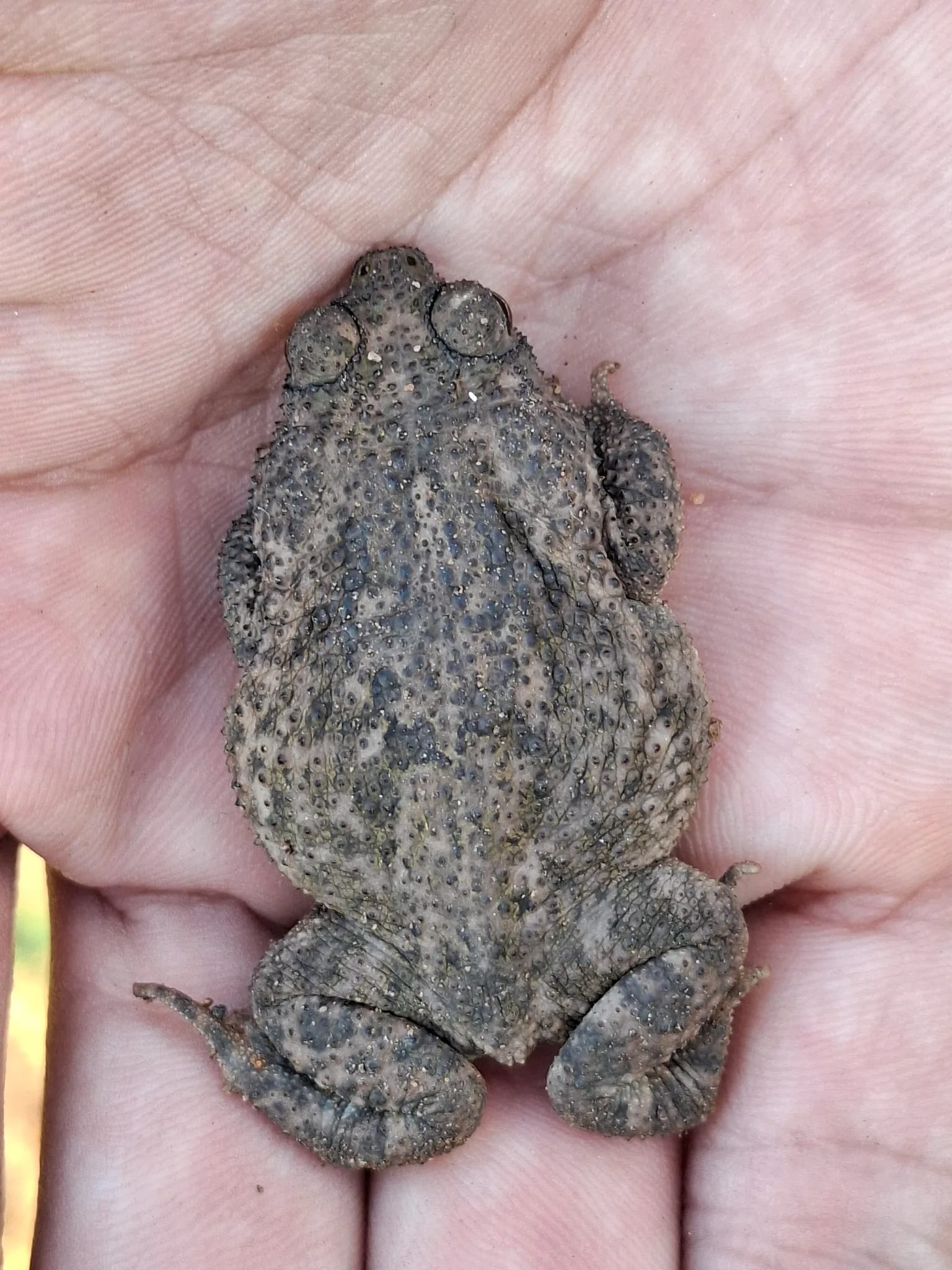
Granular toad
Rhinella granulosa
Amphibians — Anurans (Bufonidae)
Rhinella granulosa is a toad of the dry, seasonal environments of northeastern Brazil, highly adapted to extreme shifts in temperature and water availability. It is one of the most representative species in the herpetofauna of the Caatinga — Brazil’s semiarid thorn-scrub biome.
A resilient bufonid of semiarid Brazil
Adapted to extreme climatic regimes, the granular toad behaves opportunistically, emerging quickly after rain to feed and breed. Its physiology and habits reflect classic survival strategies in semiarid biomes.
📍 Biomes it inhabits
It occurs chiefly in the Caatinga, with records also from open areas of the Brazilian savanna and transition zones. Widely distributed across northeastern Brazil and adjacent regions of South America, it occupies open habitats, bare ground, and rural areas.
🌍 Conservation status (IUCN)
LC · Least ConcernAccording to the IUCN, the species is classified as LC (Least Concern). Its broad distribution and high environmental tolerance support stable populations.
🔬 Scientific classification
- Kingdom
- Animalia
- Phylum
- Chordata
- Class
- Amphibia
- Order
- Anura
- Family
- Bufonidae
- Genus
- Rhinella
- Species
- Rhinella granulosa (Spix, 1824)
⚙️ Specifications and metrics
- Body mass: Up to ~100 g (3.5 oz).
- Body length: 6–9 cm (2.4–3.5 in).
- Skin: Rough and granular, characteristic of the group.
- Chemical defense: Toxic secretions produced by the parotoid glands.
- Activity: Predominantly nocturnal.
- Generation length: ~3–4 years.
Diet: Insectivorous carnivore — insects, arachnids, and other invertebrates caught on the ground.
📅 Life cycle
- Reproduction: Oviparous, strongly associated with heavy rainfall.
- Egg-laying: Thousands of eggs in gelatinous strings.
- Development: Fast-growing aquatic tadpoles that take advantage of temporary pools.
- Lifespan: Estimated at ~7–10 years in the wild.
🔗 Ecological ripple effect
As an abundant predator of invertebrates, Rhinella granulosa plays an important role in insect control in dry environments. Its swift response to rain links pulses of water to the ecological dynamics of the Caatinga.
🤔 Why it matters
- One of the most common toads of the Caatinga.
- Highly adapted to hot, dry environments.
- Explosive breeding after rain.
- A key species in food webs of the semiarid region.
🧪 Did you know?
- The name granulosa refers to the skin’s rough texture.
- It can remain buried throughout long dry spells.
- It is often confused with other toads of the Caatinga.
- Its appearance after rain is a striking event in the semiarid region.
Small discoveries
- Extreme climatic regimes
- Environments with long dry spells and rainfall concentrated in short intervals.
- Caatinga
- Brazil’s semiarid thorn-scrub biome.
- IUCN
- International Union for Conservation of Nature — the global authority on assessing extinction risk.
- Granulosa
- A surface bearing small granules and warts.
- Parotoid glands
- Glands located behind the eyes, characteristic of toads.
- Oviparous
- Eggs laid directly in water, with aquatic larval development.